
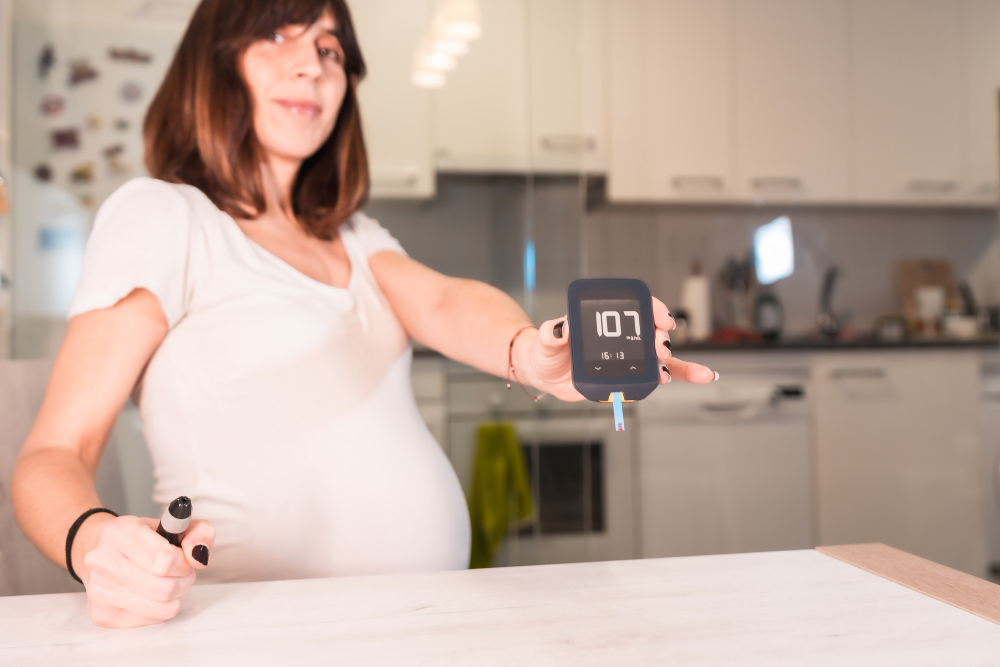
What is Gestational Diabetes?
Gestational diabetes is a type of diabetes that develops during pregnancy. It affects how your body uses sugar. Because it often appears in the second half of pregnancy, many women may not notice it at first. However, gestational diabetes can impact both mother and baby. Early detection and proper care are important for a healthy pregnancy. According to the CDC, about 2% to 10% of pregnancies in the United States are affected by gestational diabetes each year.
Symptoms of Gestational Diabetes
Often, gestational diabetes does not cause clear symptoms. Still, some women may notice signs. For example, you might feel more thirsty than usual. Or, you may need to urinate more often. Sometimes, you may feel more tired than normal. Because these symptoms can be mild, regular screening is important. Watch for these signs:
However, many women have no symptoms at all. That is why routine testing during pregnancy is key.
Causes and Risk Factors
Gestational diabetes happens when your body cannot make enough insulin during pregnancy. Insulin is a hormone that helps control blood sugar. During pregnancy, your body makes more hormones and goes through changes. These changes can make it harder for insulin to work well. As a result, blood sugar levels can rise. Several factors can increase your risk:
Even if you have no risk factors, you can still develop gestational diabetes. Therefore, all pregnant women should get screened.
Diagnosis and Screening
Doctors usually test for gestational diabetes between 24 and 28 weeks of pregnancy. Sometimes, testing may happen earlier if you have risk factors. The most common test is the glucose challenge test. Here is how it works:
If your blood sugar is high, you may need a second test called the oral glucose tolerance test. This test checks how your body handles sugar over a few hours. Early diagnosis helps you and your doctor manage gestational diabetes well.
Treatment and Management
Managing gestational diabetes is important for your health and your baby’s health. Most women can control their blood sugar with healthy eating and exercise. In some cases, medicine or insulin may be needed. Your doctor will guide you. Treatment steps include:
With good care, most women have healthy pregnancies and babies.
Lifestyle Tips for Expectant Mothers
Healthy habits can make a big difference. For example, eating small, regular meals helps keep your blood sugar steady. Also, choosing high-fiber foods can help. Here are some tips:
Always talk to your doctor before starting any new exercise or diet plan.
Prevention Strategies
While you cannot always prevent gestational diabetes, some steps may lower your risk. For instance, keeping a healthy weight before pregnancy helps. If you plan to become pregnant, try to:
Even with these steps, some women will still develop gestational diabetes. Early screening and care are important for everyone.
When to See a Doctor
If you are pregnant and notice symptoms like extreme thirst or frequent urination, contact your doctor. Also, if you have risk factors, ask about early screening. Regular prenatal visits help catch problems early. If you have gestational diabetes, follow your care plan closely. This helps protect both you and your baby.
For personalized advice on gestational diabetes, consult Dr. Srikanth Goud. Early care leads to better outcomes for you and your baby.